Camdibi Kindervillage
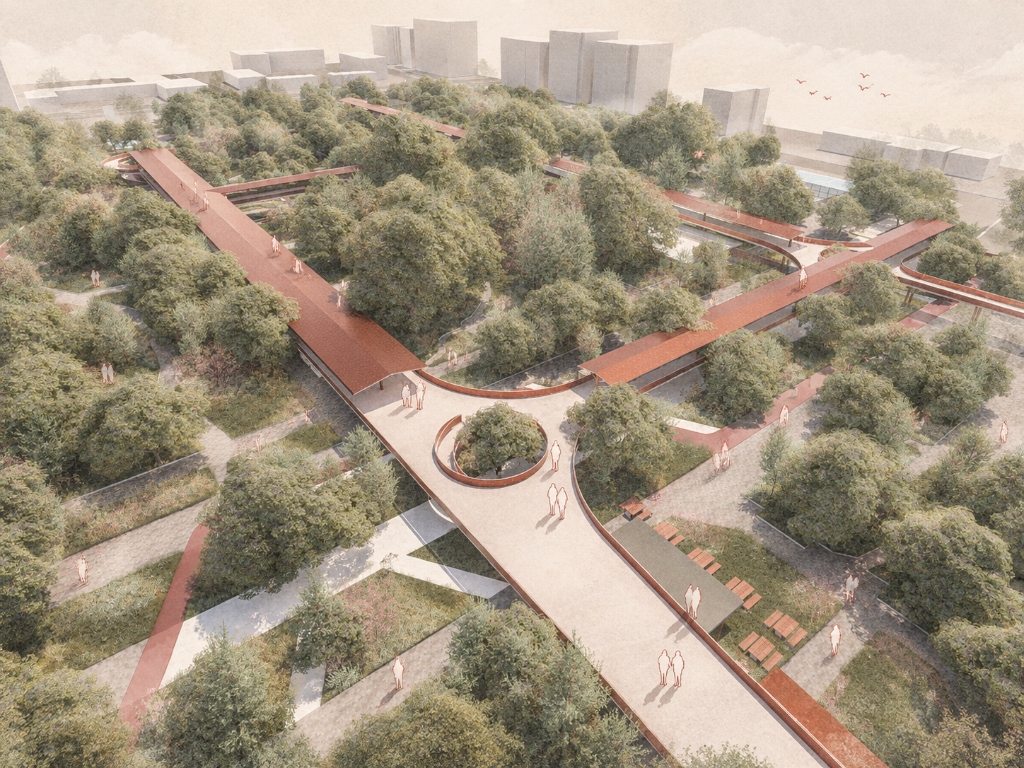
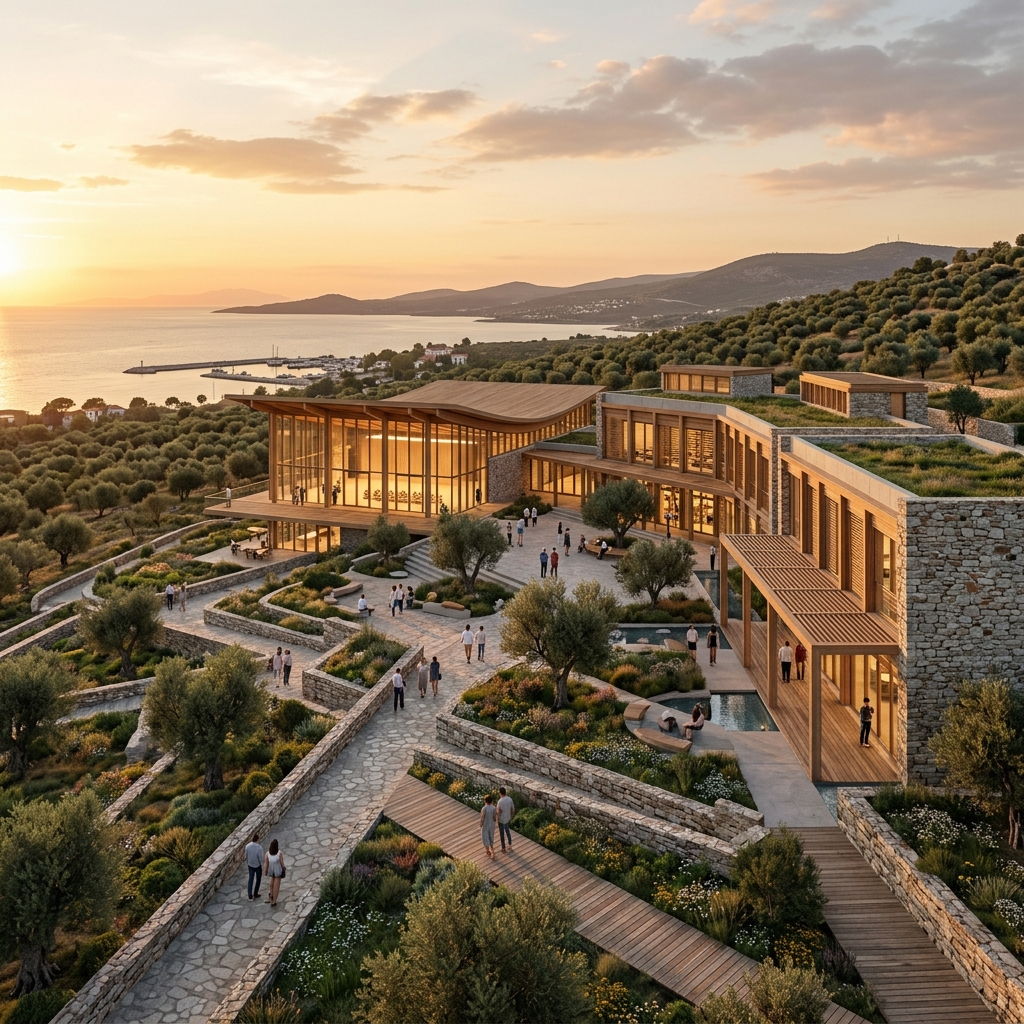
Camdibi Kindervillage is located on a narrow plot squeezed within the dense and irregular urban fabric of Bornova, Izmir. The project is built upon the concept of a 'village settlement' to break this urban pressure. Each classroom is designed as an independent 'village house' capable of making its own decisions, and a fragmented massing strategy creates breathing open spaces within the plot.
Design Concept: A Village within the City
In response to the surrounding dense construction, the program's classrooms and other functions are consciously fragmented into spatially separated units (village houses). These units are positioned around a central gathering area, forming both individual zones and spaces for public interaction. The aim is to alleviate the surrounding visual and spatial pressure, creating a more spacious atmosphere for the children.
Interaction with Nature & Agriculture
The design proposes a scenario where children can establish a direct relationship with nature. Each 'village house' has a private garden where children can grow and harvest plants based on the collective decisions of their own classroom. This approach aims to develop environmental awareness in children.
Sectional Decisions & Play Areas
Due to spatial constraints on the site, the issue of sufficient play area was resolved through a vertical intervention at the ground level. The initial 3-meter ceiling height of the covered area under the upper floor was found to be oppressive for children. To solve this, the ground level was excavated by 210 cm, creating a spacious and comfortable common play area with a ceiling height exceeding 5 meters.
Images & Drawings
8 images