Culture Commons of Urla
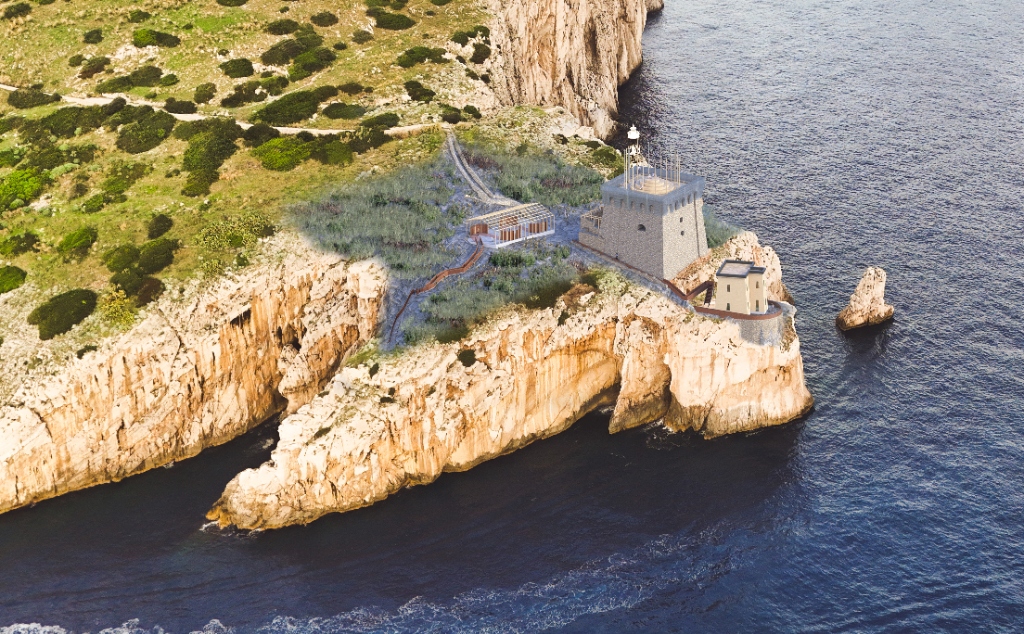
Set on the historical Quarantine Island of Urla, Izmir, this project proposes the spatial inversion of an island of tecrit (isolation). Designed for migrants awaiting citizenship, the Culture Commons reinterprets uncertainty into productivity - establishing a place to learn, produce, and share culture while waiting, woven around a shared climate-responsive courtyard and the activated historical Tahaffuzhane.
Concept & Context — Quarantine Island
On the coast of Urla, in the Gulf of Izmir, lies a small island. Throughout various periods of history, this place served as a quarantine station—during outbreaks of epidemic diseases, people were separated from society and brought here, left to wait in absolute uncertainty. That uncertainty was physical, social, and psychological. Today, the island faces the same question once again. Migrants awaiting citizenship, much like those once placed in quarantine, are caught in-between—neither fully here nor fully there. Culture Commons of Urla does not eliminate this condition. It preserves the condition but reverses it: transforming the act of waiting into a productive, shared, and cultural experience.
Historical Spine — Interacting with Tahaffuzhane
The existing historical tahaffuzhane (quarantine station) is neither demolished nor erased. It is left within history—but given a new meaning. The building's original spatial organization, the sequence of rooms, and the character of the corridors are fully preserved. These spaces are filled with installations, sounds, and stories: encounter cells, voices from elsewhere, shadow exchange. When visitors step into these spaces, they do not encounter an exhibition, but a life—from an unfamiliar geography, in an unfamiliar language.
Programmatic Interventions
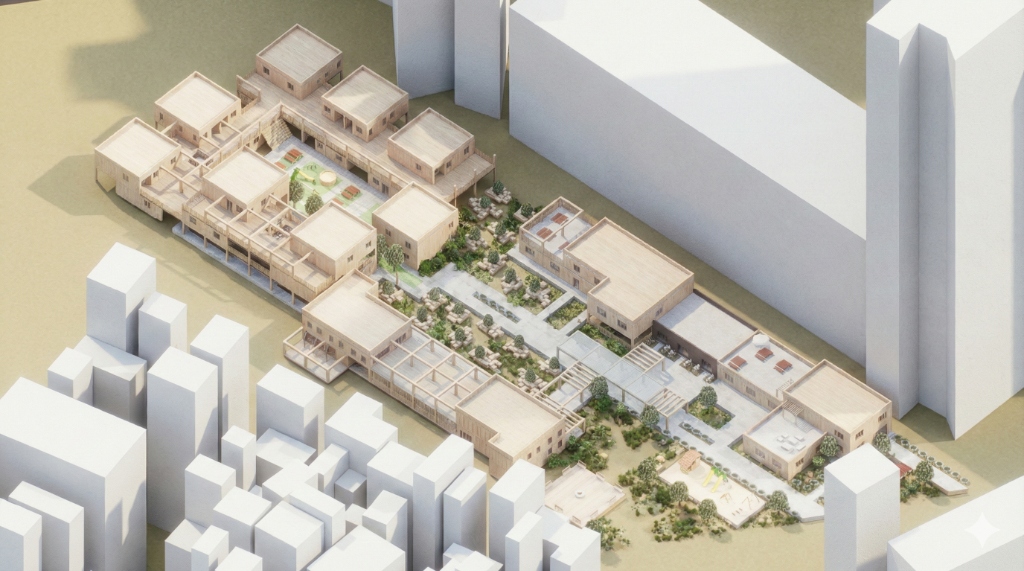
The only adaptation space in the project is the language classroom. Turkish is taught here—but alongside it, the migrant's native language remains. Every other space operates in the opposite direction: enabling the migrant to bring their own culture to Izmir. There are workshops—handicrafts, culinary culture, craftsmanship. This production does not remain indoors: it goes on sale in the pop-up store, and spills into the courtyard on Sundays. The migrant's labor gains economic value, and the people of Izmir purchase it. The upper floors house accommodation units—a temporary but dignified home. Healthcare and legal support services are also integrated: so no one is left alone while waiting. This is not an integration project. It is a mutual acquaintance project.
Courtyard Scenarios
The courtyard is the project's most dynamic space—it has no fixed function, transforming according to the rhythm of the day and week. Daily Use: Migrants and locals meet in a shared open space. On an ordinary afternoon, two different lives share the same ground. Market Day: Products crafted in the workshops spill out into the courtyard. The courtyard transforms into a cultural marketplace—handicraft, food, craftsmanship. Purchasing becomes an act of getting to know a culture. Cinema Night: The courtyard opens outward. A shared screen, a shared audience. Two different lives look at the same image—the simplest, most raw moment of encounter in this project.
Images & Drawings
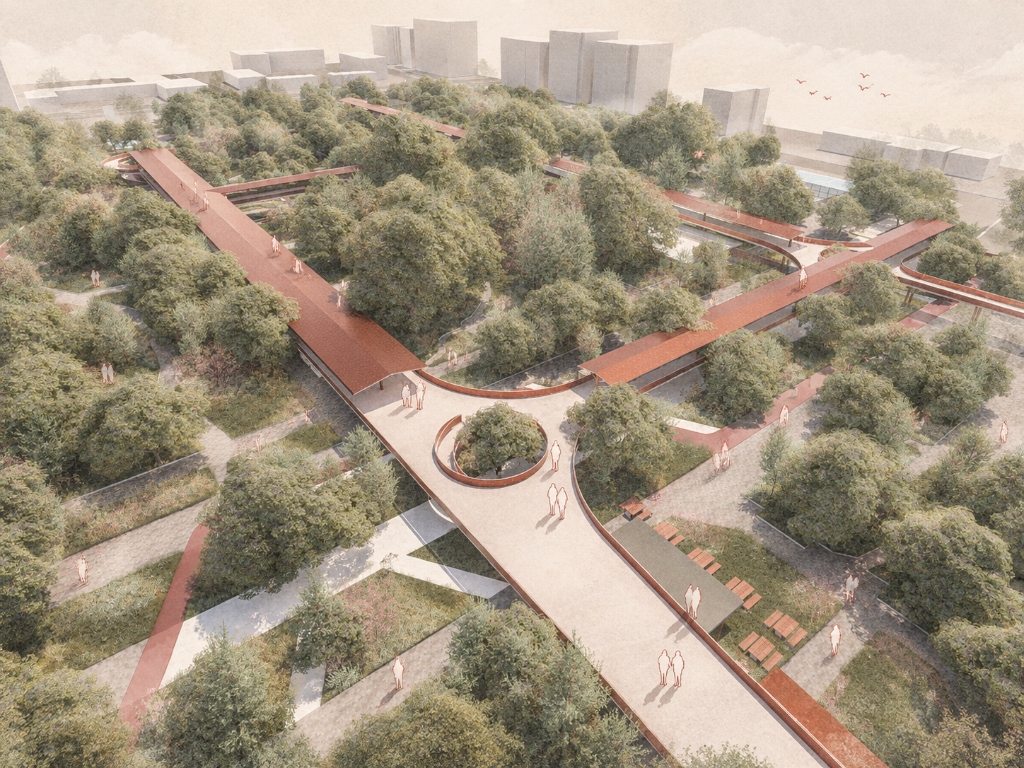
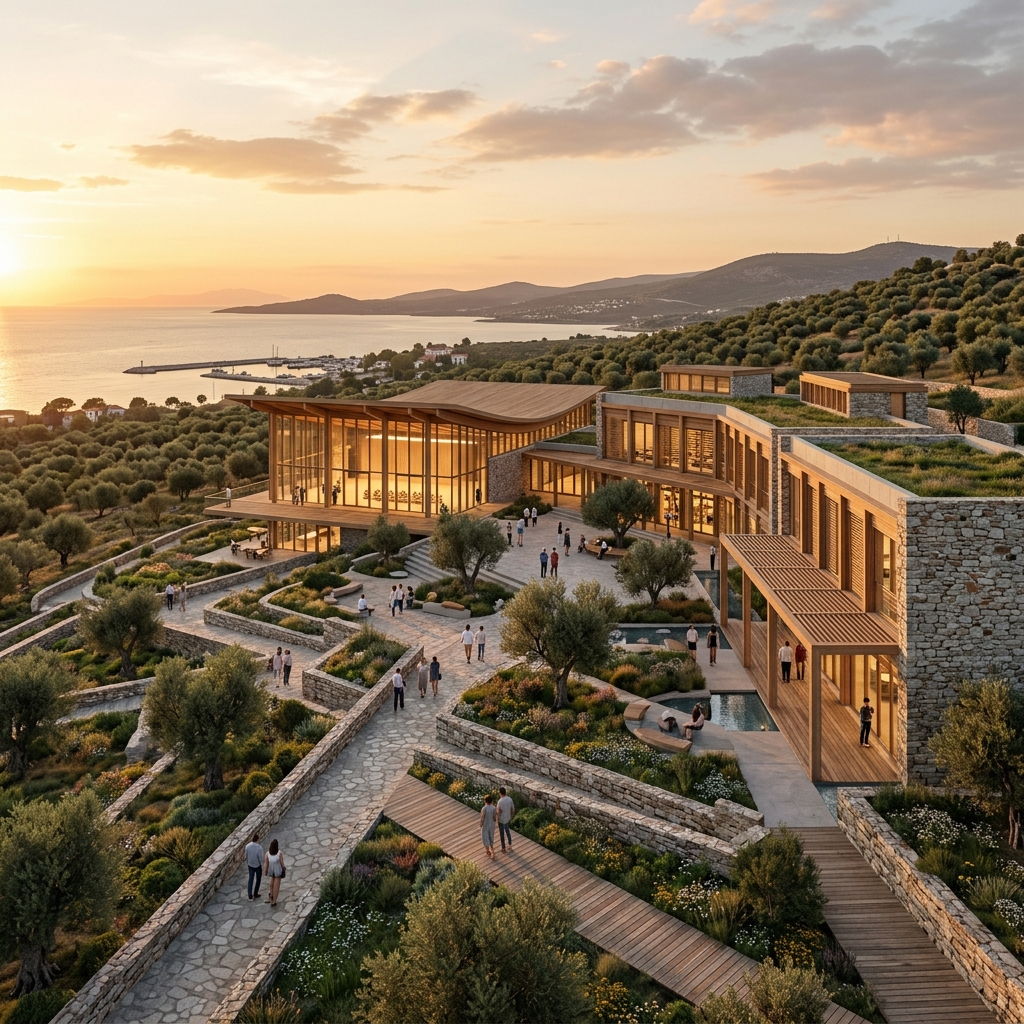
3 imagesThe main rendering of the Culture Commons, showing the central courtyard and community pavilions.
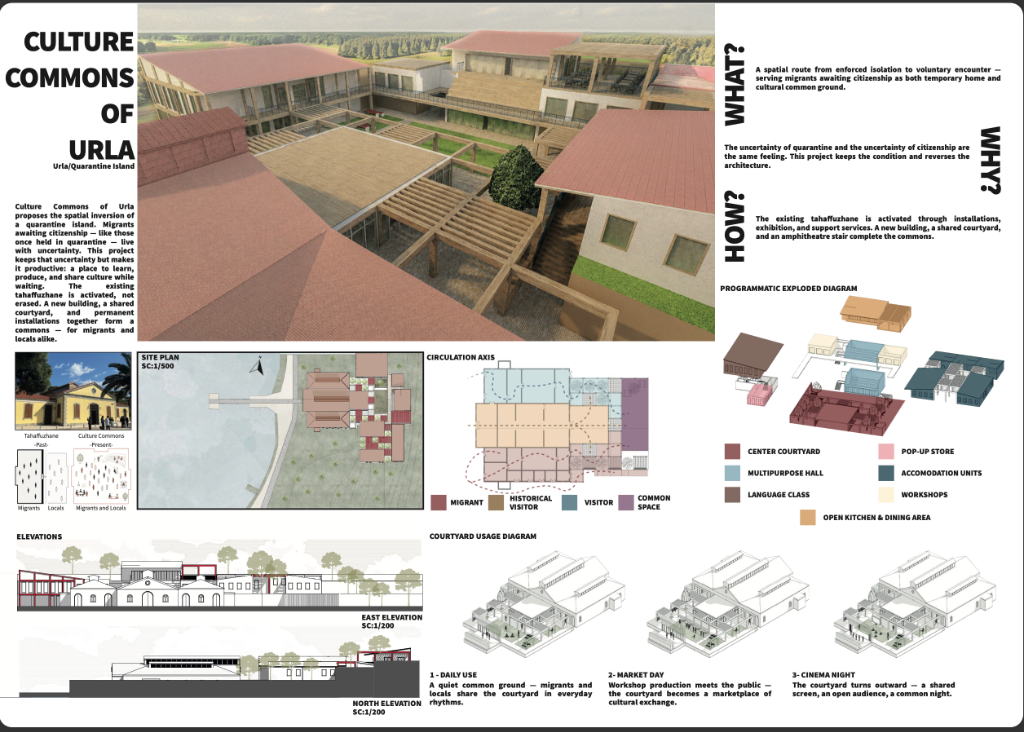
Project Panel 1: Site Plan, Programmatic Exploded Diagram, Elevations, and Courtyard Scenarios.
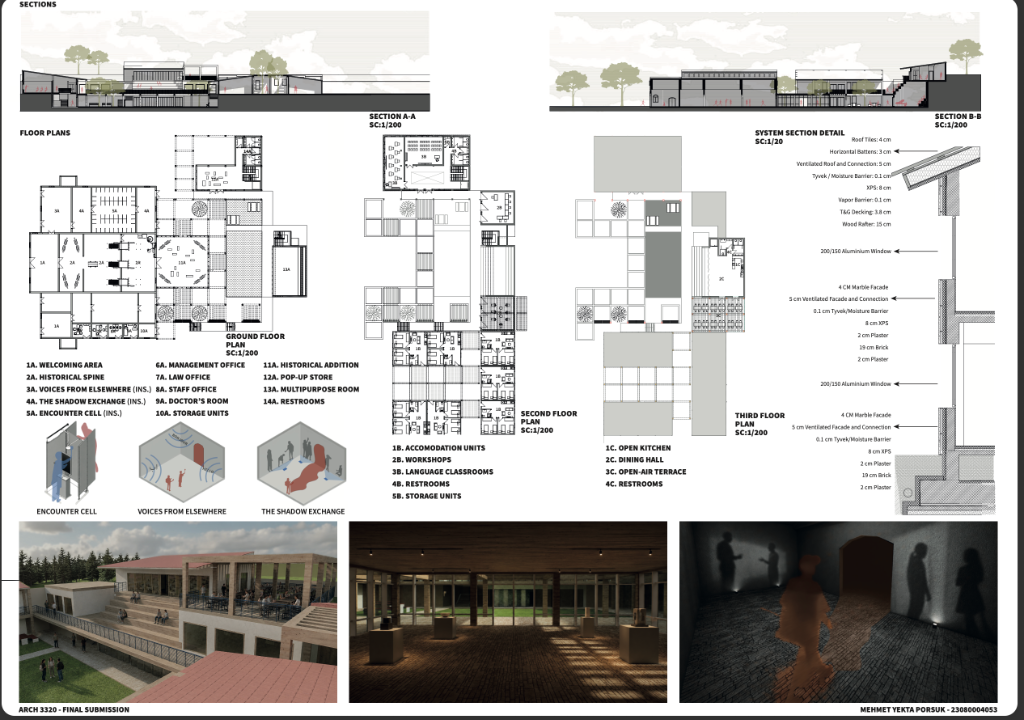
Project Panel 2: Floor Plans, Conceptual Sections, and Architectural Details.